



01
Upload evidence
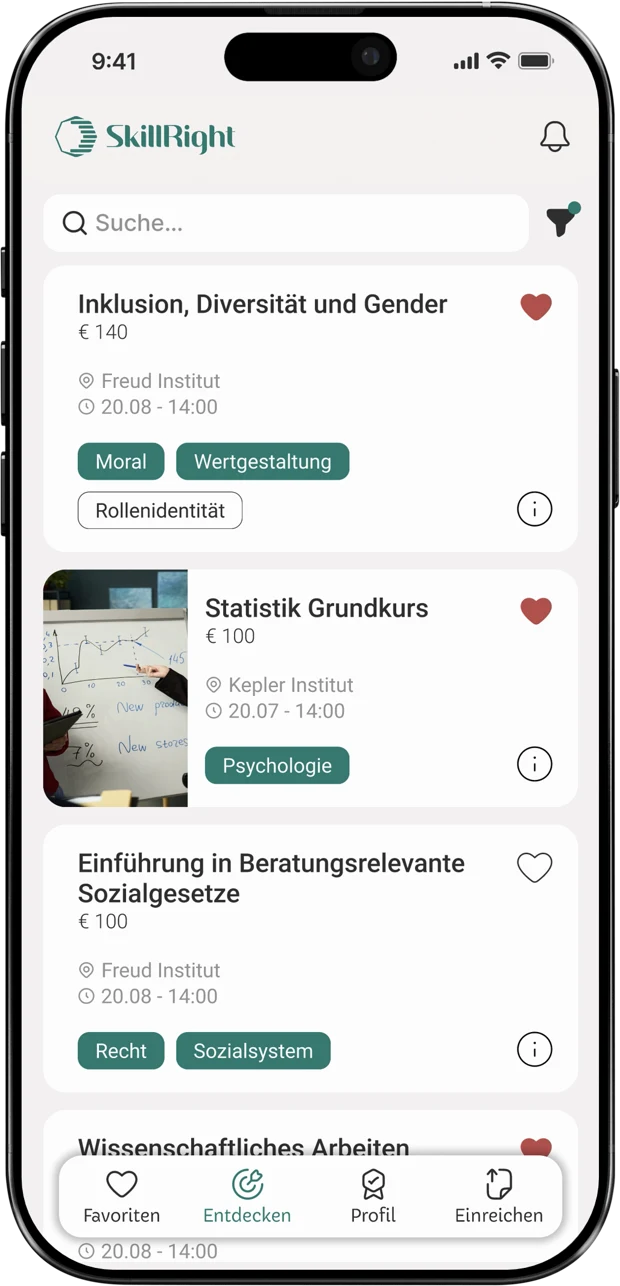
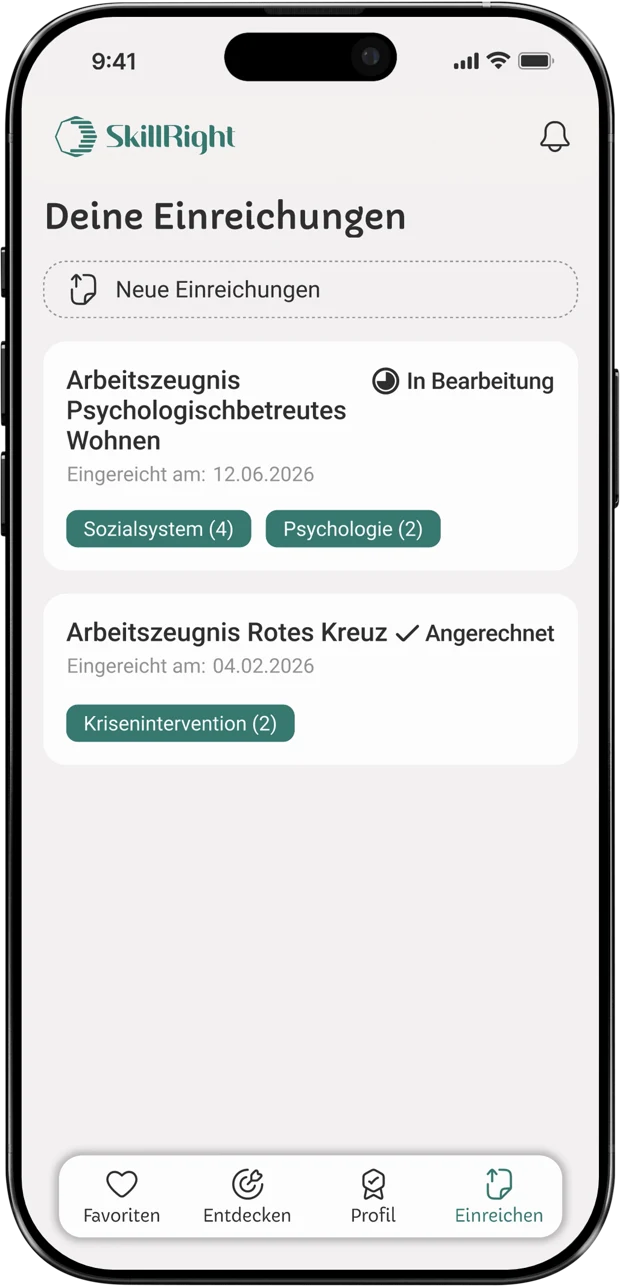
Upload all evidence. The AI reads it and assigns it to the matching competences and levels.
A qualification says what someone has learned. A competence profile shows what someone can do.
SkillRight uses AI to bring all evidence together into a personal competence profile. This shows where strengths lie and which further training is worthwhile.
Made forCareer and education guidance, education providers, professional associations and companies
 Knowledge transfer
Learned every day. Recorded nowhere.
 Analytical thinking
 Craftsmanship
 Conflict resolution
A certificate proves a qualification. What someone has learned at work, in courses or through volunteering is recorded nowhere. When reorienting, training or changing jobs, it is exactly this knowledge that is missing.
The result: potential goes unused, and further training is chosen on a hunch.
AI is changing which competences are in demand. At the same time, it makes it possible for the first time to capture and match competences at scale.

The hurdle was never the idea, but the volume of data. Three huge worlds of data have to fit together:
This matching was impossible by hand. For AI, it is precisely this kind of matching that is its great strength.
SkillRight evaluates all evidence with AI and shows current level, career goal and suitable further training in one profile.
Four lines. Tap one to see which competences lie behind it.
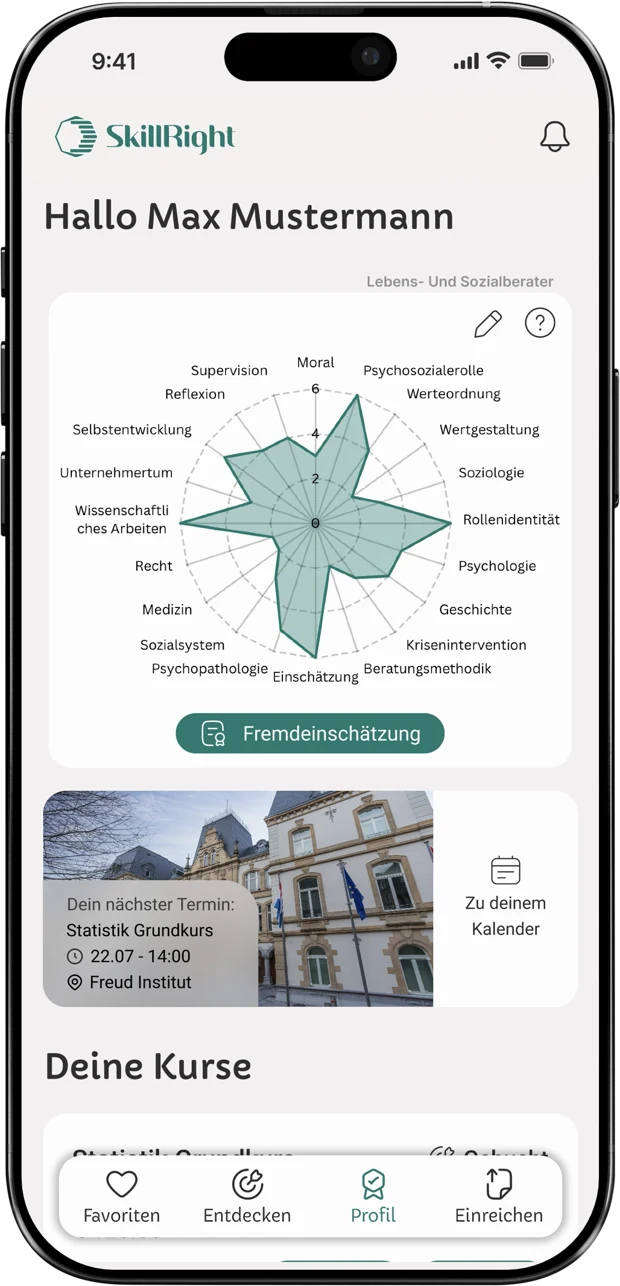
Today: strong in psychology, conversation skills and crisis intervention. Little experience in employment law, didactics and project management.
AI does the evaluation. Levels are assigned according to the NQF and a scientific competence model.
The National Qualifications Framework assigns qualifications in Austria to eight levels. It has been enshrined in law since 2016 and is aligned with the European Qualifications Framework (EQF).
For the competence profile, this means: a competence at level 6 corresponds to the level of a bachelor’s degree.
The competence web was developed together with WU Vienna and the WKO and forms the foundation of every profile.
Every competence is assigned a level based on the NQF, not on an invented scale.
We also capture what applies beyond a single field. These are exactly the competences that count in a career change.
The subject expertise comes from competence research, the implementation from ten years of software development.
Others rely on self-reporting or interpret freely. SkillRight evaluates real evidence.
Swipe sideways to compare
| CV | Competence test | AI chatbot |  | |
|---|---|---|---|---|
| What it’s based on | Self-reported | Self-assessment | Entered text, freely interpreted | Real evidence, evaluated with AI |
| Yardstick | None | Varies by provider | None, results vary | Levels based on the NQF |
| What becomes visible | Qualifications and positions | Individual skills | A summary | All competences, including transversal ones |
| Next step | Left open | Usually left open | General tips | Courses that close exactly the gaps |
See for yourself: we’ll show you the difference on a real profile.
Book an intro callFree · 45 minutes · no obligationUpload all evidence. The AI reads it and assigns it to the matching competences and levels.
The competence web shows at a glance where someone is strong and which competences are still missing for the career goal.
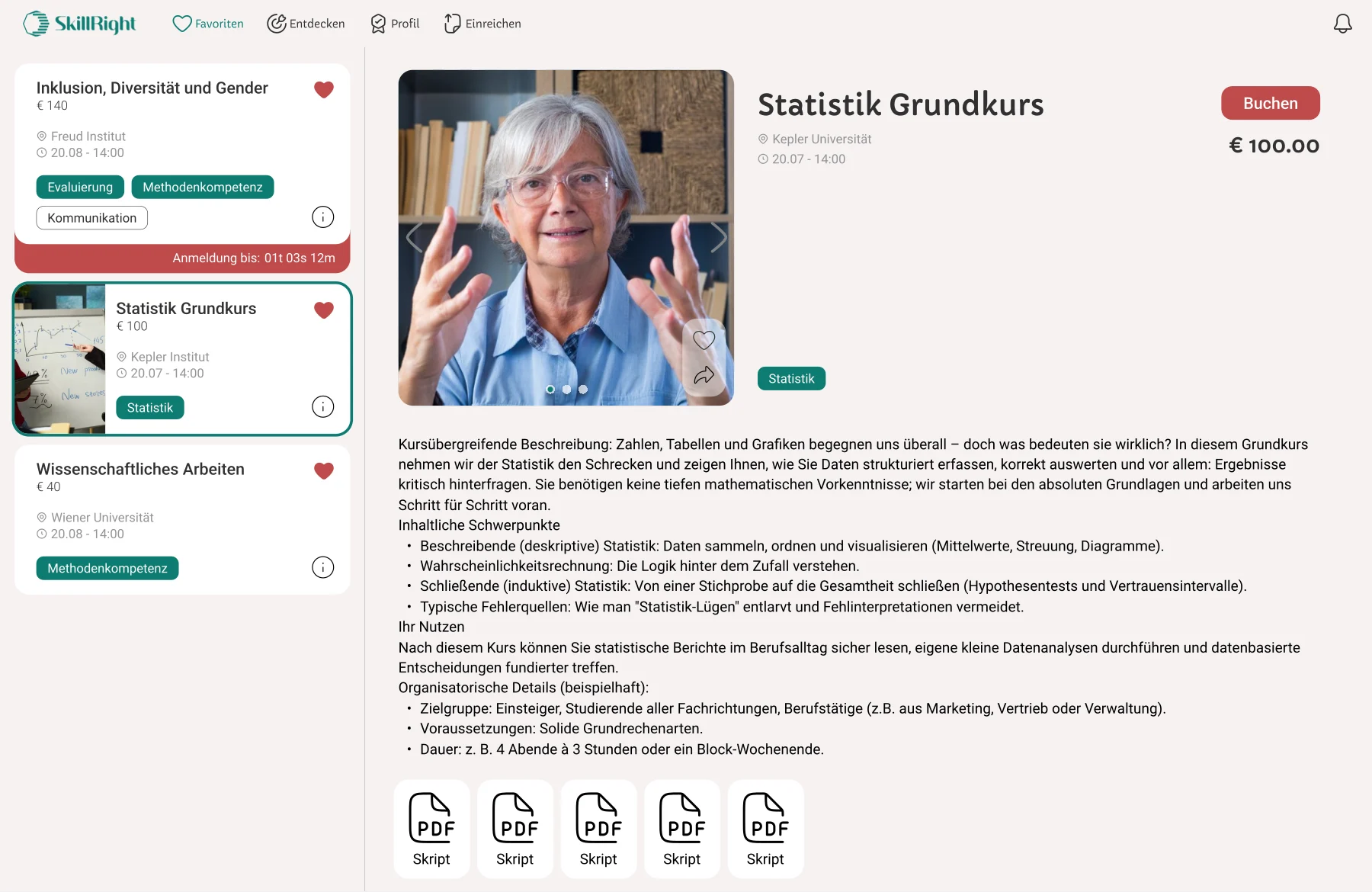
SkillRight suggests courses that close exactly these gaps. With every course completed, the profile visibly grows.
In the intro call, we’ll show you SkillRight using a real example and answer your questions.
Book an intro callFree · 45 minutes · no obligationQuestion not answered here? In the intro call we’ll take the time to answer it.
A competence profile shows what a person can actually do, regardless of where they learned it. To do this, SkillRight brings together education, work experience, further training and volunteering, and presents the competences in a competence web.
The competence analysis is the path, the competence profile the result. SkillRight analyses all evidence with AI and then presents the identified competences in the competence profile.
For organisations that support people in their professional development: career and education guidance, education providers, professional associations and companies. They use SkillRight for the people they advise, train, represent or employ.
Companies see where employees are strong and which further training closes gaps. When hiring, they specify which competences a role requires and see in the profile whether these are present.
Anything that proves competences: school and university certificates, employer references, employment contracts, course confirmations, certificates or evidence of volunteering.
The National Qualifications Framework assigns qualifications in Austria to eight levels and is aligned with the European Qualifications Framework. Because SkillRight is based on it, competence profiles are comparable with recognised qualifications.
No. The AI suggests which competences a piece of evidence proves. You can adjust the assessment yourself, and you can also request an assessment by experts.
SkillRight is GDPR-compliant. The data is stored on servers in Europe, and the AI processing also takes place in Europe. For matching, the AI works with competences, not names.
Education providers create their courses themselves and assign them the competences they teach. That way, the courses appear for exactly the people who still lack these competences. More for education providers
In the intro call, we’ll show you SkillRight live on the product and answer your questions.